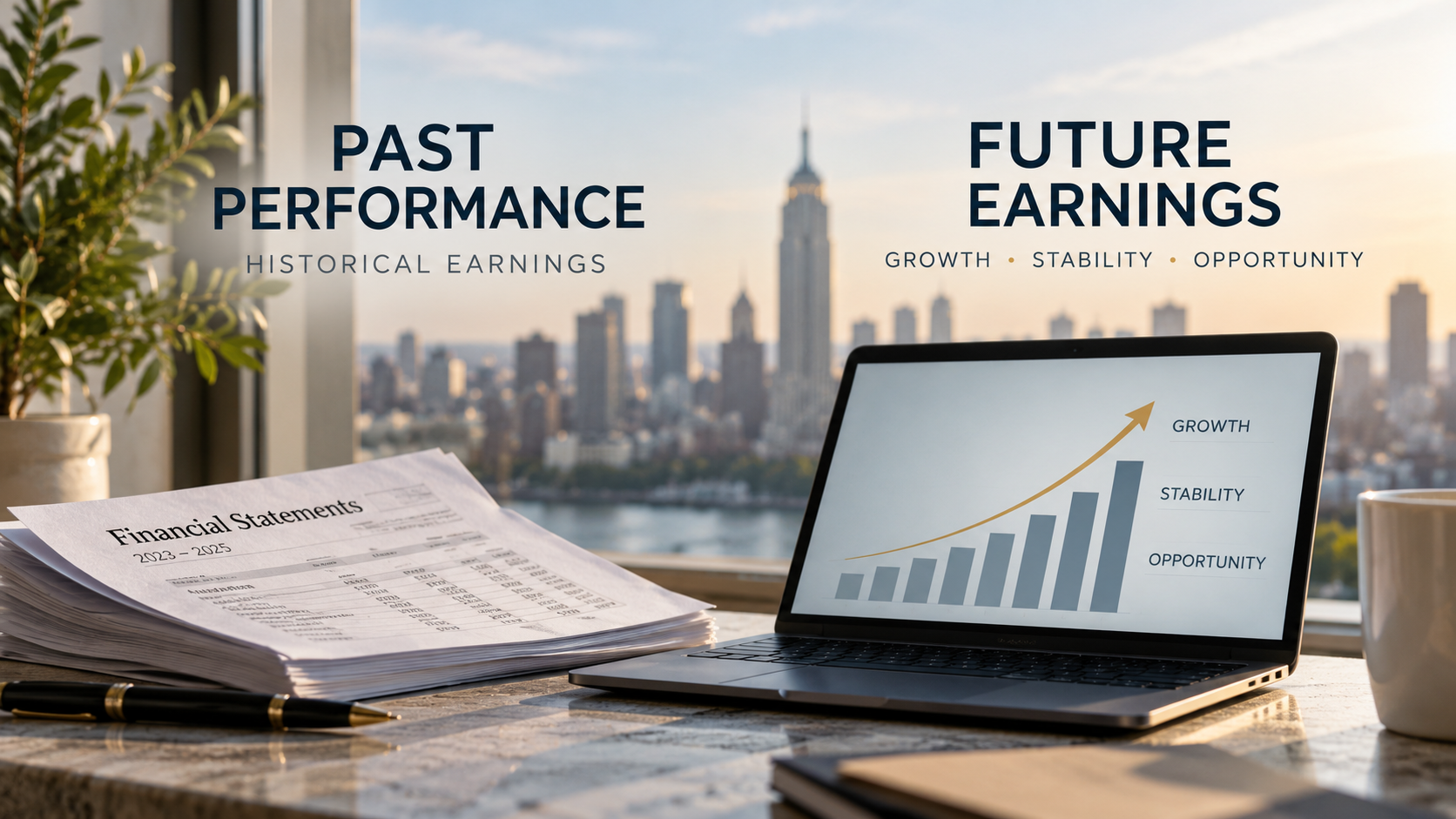
Why Business Valuation Is About Future Earnings, Not Just Past Performance
When someone invests in a stock, they're not just looking at what the company earned last year.
They're trying to determine what the company will earn in the future and what those earnings are worth today.
Buying a privately held business isn't all that different.
Historical earnings are important. They establish a track record and help buyers understand how the business has performed.
But when a buyer decides what multiple they're willing to pay, they're also thinking about what happens next.
What Does a Valuation Multiple Really Represent?
Let's say two businesses in the same industry each generate $500,000 in annual earnings.
One sells for three times earnings, or $1.5 million.
The other sells for four times earnings, or $2 million.
Why would a buyer pay an additional $500,000 for a business generating the same earnings today?
Because the buyer may have greater confidence in the second company's ability to maintain or grow those earnings.
Maybe it has more recurring revenue, stronger margins, better growth prospects or a management team that can operate without the owner.
The multiple reflects more than historical profitability. It also reflects expectations about future performance and the risks associated with achieving it.
Historical Earnings Are the Starting Point
When valuing an established business, I generally start with its historical financial performance.
Depending on the size and nature of the business, that may mean looking at Seller's Discretionary Earnings (SDE) or EBITDA.
Those earnings provide a foundation for comparing the business with similar companies that have sold.
But historical results don't guarantee future performance.
A buyer wants to understand whether revenue is sustainable, whether margins can be maintained and what could change after the acquisition.
That's why two businesses with similar financial results can have very different valuations.
What Does This Mean for Business Owners?
If you're thinking about selling your business, improving its value isn't necessarily just about increasing this year's earnings.
It's also about giving a buyer confidence in what the business can produce under new ownership.
Consistent financial performance, recurring revenue, documented customer relationships and a capable management team can all help support that confidence.
Growth opportunities matter too, although buyers will generally place more value on opportunities supported by a demonstrated track record than on projections alone.
The more confidence a buyer has in the sustainability of future earnings, the stronger the case may be for a higher valuation multiple.
The Bottom Line
A business valuation isn't simply a calculation of what the company earned last year multiplied by an industry average.
It's an assessment of what those earnings are worth to a buyer, considering both the company's track record and its future prospects.
You're not just selling what your business has earned. You're selling its ability to keep earning.